
A lot of F1 Fantasy players seem to use Autopilot backwards.
The instinct is usually to activate it when confidence in the lineup is low, but the chip honestly feels strongest when the team is already in a good spot, and the only real problem is figuring out which premium driver is actually going to deliver the biggest score.
That’s the whole point of the chip.
Autopilot isn’t really a “save the team” chip. It’s more of a “protect the boost from landing on the wrong driver” chip.
The mechanic itself is simple: after the weekend finishes, the game automatically moves the 2× Boost onto the highest-scoring driver in the lineup if that driver wasn’t originally selected.
On paper, that sounds decent but not game-changing. In practice, though, there are certain weekends where that flexibility becomes incredibly valuable.
Sprint weekends are the best time to use Autopilot
Sprint weekends are probably the clearest example of when Autopilot becomes useful.
With only one practice session before lock, there’s just less information available for fantasy players. Teams are still figuring out setup direction, tyre behaviour, and race pace when fantasy decisions already need to be finalized.
This season has already shown how dangerous that can be.
Mercedes has looked dominant at some circuits, McLaren has brought upgrades that shifted the competitive order almost overnight, and Ferrari has still shown elite upside despite some inconsistent weekends. Trying to perfectly predict which top driver will convert pace into fantasy points has been much harder than usual.
That is exactly where Autopilot earns its value.
Instead of stressing over whether Norris, Leclerc, Antonelli, or Russell is the “correct” boost target, the chip gives some protection against a chaotic weekend where the expected result suddenly flips after Sprint Qualifying or the Sprint itself.
Penalty weekends can completely change fantasy scoring
One of the sneaky-best times to use Autopilot is during what fantasy players usually call a “penalty weekend.”
That normally happens when a top driver takes an engine penalty and starts much lower on the grid than the car’s actual pace suggests. Under the current regulations, teams are managing extremely complex power units and energy systems across a long season, so grid penalties are still common once mileage starts building up.
These weekends can create massive fantasy swings.
A driver who qualifies near the front might score solid points with a clean race, but a faster car starting P12 or P15 because of penalties suddenly has huge positions-gained upside. Add in overtakes, fastest lap potential, driver of the day points, and a recovery drive through the field, and that driver can easily become the highest fantasy scorer of the weekend even without winning the race. Max Verstappen, for example, scored the most fantasy points in Australia and the second most points in Miami, without stepping foot on the podium, thanks to all of his overtaking points. So far this season, Verstappen has completed an average of 11.2 overtakes per race, far more than the next driver (Leclerc with 7.8 overtakes per race).
That unpredictability makes Autopilot incredibly valuable.
Instead of trying to guess whether the “safe” front-row starter or the recovering penalty driver will score more, the chip lets the scoring play out naturally and moves the boost afterward.
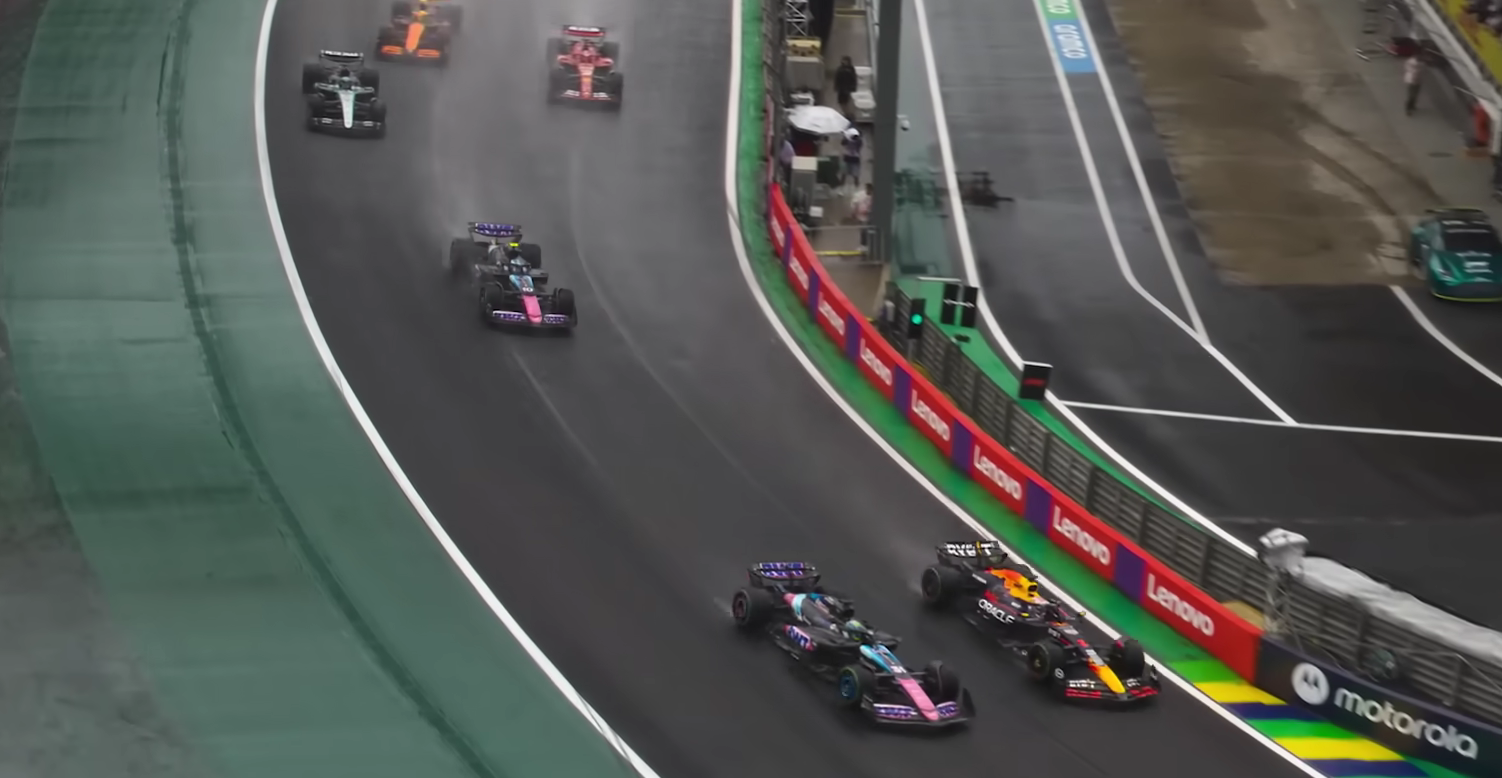
Brazil has historically been one of the classic examples of this kind of chaos for a couple of reasons: it comes later in the season, when teams are starting to run through their component allowances; and it also offers strong overtaking opportunities, meaning a refreshed power unit can be extremely valuable even from deeper on the grid.
Wet races and chaotic circuits increase the chip’s value
Weather is another major factor.
Wet races create exactly the kind of volatility Autopilot thrives on. One badly timed safety car, a late crash, or changing track conditions can completely flip a fantasy weekend upside down.
The same applies to circuits that naturally create more incidents and strategy variation.
Tracks like Canada, Baku, Singapore, and Brazil usually feel much better for Autopilot deployment because they regularly produce safety cars, unpredictable tyre strategies, and big positions-gained opportunities. Drivers starting slightly out of position can suddenly become elite fantasy scorers by Sunday afternoon.
Monaco tends to feel like the opposite.
When qualifying more or less decides the race, it becomes easier to manually predict the best boost target yourself. The value of Autopilot shrinks because there are simply fewer chaotic outcomes for the chip to protect against.
The biggest mistake fantasy players make
One of the biggest mistakes fantasy players make is treating Autopilot like a panic button.
The chip works best when uncertainty exists for everyone, not just when a lineup feels weak personally. If the grid order already looks obvious and one driver clearly has the highest ceiling, manual boosting is usually stronger.
Autopilot becomes valuable when the weekend has multiple realistic outcomes.
That’s why Sprint weekends, wet forecasts, engine-penalty races, and high-chaos circuits are usually the sweet spot. The more unpredictable the weekend becomes, the more valuable it is to let the game automatically find the highest scorer instead of trying to perfectly predict an unpredictable Formula 1 weekend ahead of time.


Leave a Reply