

Everyone watching the start of the 2026 season seems convinced Mercedes just nailed their aero concept, and we’re back in the 2014–16 era. But dive into the actual telemetry, and the numbers paint a totally different picture. Ignore the championship standings for a second. To understand the true pace gap between Mercedes and Ferrari across the first three races, we have to strip away a massive, controversial variable. We need to talk about the estimated 15–20 horsepower advantage Mercedes is currently extracting through an engine compression loophole.
The Engine Loophole
The rulebook for 2026 put a hard cap on engine compression ratios at 16:1, mostly to stop teams from going crazy with power output. When cold, the Mercedes power unit complies perfectly with this rule.
But physics is dynamic. Rivals have pointed out that under heavy operational loads—where internal temperatures exceed 130°C, the thermal expansion of the engine block actually alters the geometry of the combustion chamber. This heat expansion shrinks the available volume, pushing the compression ratio closer to an estimated 18:1.
The advantage lies in the manipulation of the geometric compression ratio (CR) formula:

In this equation, (Vd) represents the displacement volume and (Vc) the clearance volume (the space remaining at the top of the piston stroke). Under standard conditions, the SF-26 and the W17 both operate at the regulated 16:1 limit. However, the Mercedes engine block’s specific alloy composition allows for controlled thermal expansion of the cylinder head and piston crown at peak temperatures. By effectively “shrinking” the clearance volume (Vc) as the metal expands, Mercedes artificially spikes the pressure at the moment of ignition. Our telemetry suggests this expansion pushes the ratio toward 18:1, creating a more violent combustion event and that definitive 20hp surge that Ferrari’s more thermally stable block currently lacks.
That higher ratio translates to a massive 15–20 horsepower advantage at peak deployment. The FIA is fully aware of this and is introducing strict “hot-testing” starting June 1st. But until then, Mercedes will have been racing with a ghost advantage.
How can the FIA close the 2026 loophole that Mercedes is exploiting?
But how exactly is the FIA going to police a loophole that only appears when the car is running at full tilt?
Starting June 1st, the technical delegates are rolling out strict “hot-testing” protocols during post-session scrutineering. Instead of just measuring the engine block when it’s sitting cold in the garage, the FIA will use advanced ultrasound sensors and thermal imaging to measure cylinder wall thickness and internal volume at live operational temperatures (well above that 130°C threshold). This impending crackdown leaves Mercedes with two very uncomfortable midseason options: they must either fundamentally redesign their cooling jackets to prevent the thermal expansion which adds unwanted bulk and ruins their weight distribution, or lower their baseline compression ratio and permanently surrender that 15–20 horsepower.
Masking the Aero Deficit
That extra punch on the straights is doing some serious heavy lifting. In fact, it’s completely covering up the fact that they are slightly behind Ferrari on aero.
Pull up the raw GPS and sector data from these first three weekends, and what’s actually happening with the Mercedes is super obvious :
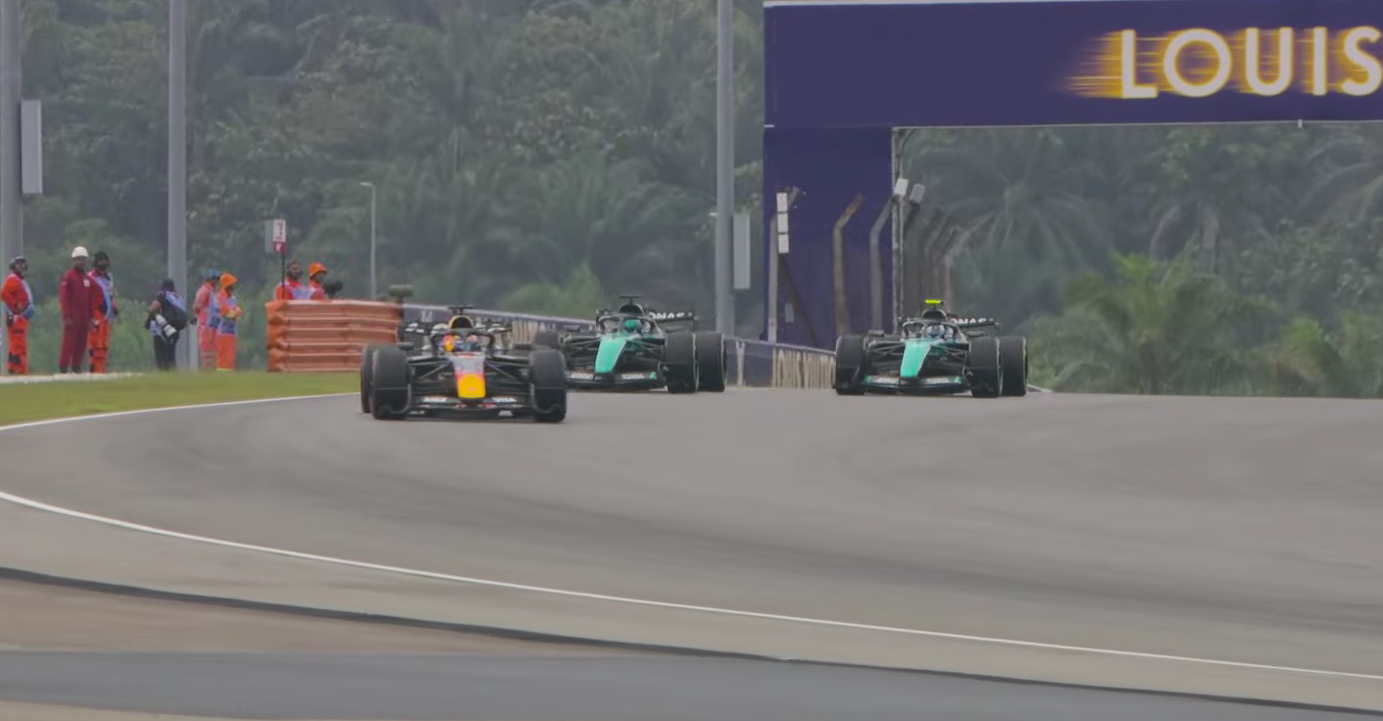
1) The Straight-Line Delta: Across the high-speed trap sectors, Mercedes customer units are consistently pulling a 0.20s to 0.25s advantage. The way they pull from 200 km/h to 300 km/h just shows their combustion efficiency is on another level.
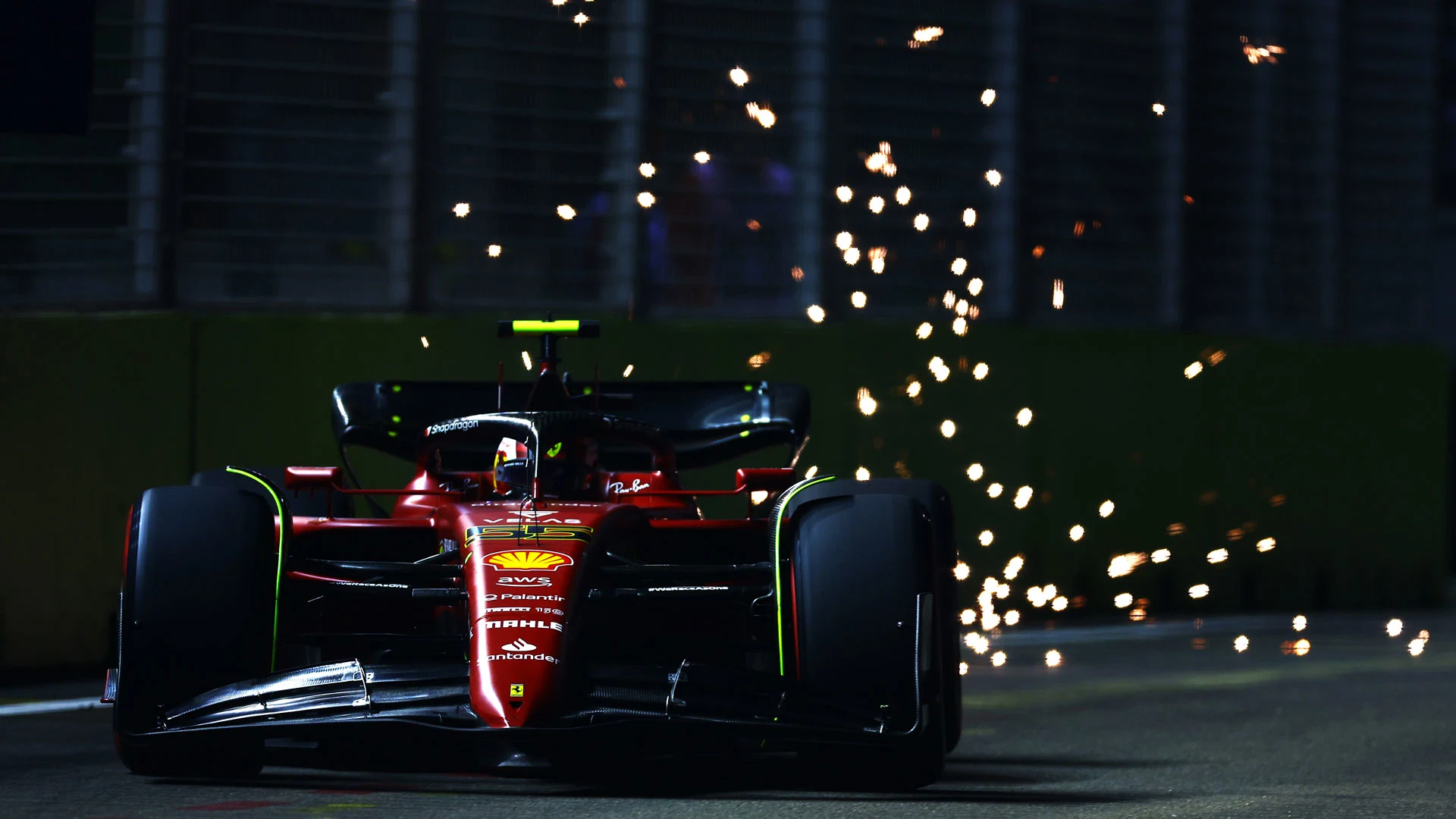
2)The Traction Zones: When things get slow and traction-limited (under 120 km/h), it’s all Ferrari. Telemetry shows the SF-26 getting on the throttle three to four meters earlier than the Mercedes on corner exits.
3)Tire Management: Because Mercedes has a 20hp buffer, they can afford to run slightly more rear wing without suffering a top-speed penalty. This extra downforce keeps the car from sliding, inherently protecting its rear tires from thermal degradation.
In a perfectly equal power scenario, Ferrari’s superior slow-corner mechanical grip would allow them to control the race. But right now, Mercedes’ thermal expansion trick provides just enough sheer grunt on the straights to override Ferrari’s cornering advantage(there’s still hope for us Ferrari fans).
Normalizing the Telemetry
So, what happens when the FIA slams this loophole shut in June? By taking the raw GPS sector data and mathematically subtracting that 0.20s straight-line delta, we can equalize the engines and see what the baseline pace actually looks like.
The adjusted data points to a violent shift in the competitive order :
1)The Pace Reversal: Take away that crazy top-end deployment, and Mercedes loses their straight-line edge completely. Once you normalize the pace, Ferrari’s mechanical grip actually gives them about a 0.18s advantage per lap.
2)The xP Swing: Mercedes clearly racked up a ton of Expected Points (xP) over these first three rounds. But in this adjusted model, Ferrari actually holds a 64% win probability in standard race conditions.
Could we see Mercedes’ dominance end before the FIA closes the 2026 engine loophole?
But we don’t even have to wait until the June 1st hot-testing to see this aero deficit exposed. Just look at the upcoming calendar. Before the FIA loophole officially closes, we head to tracks where top speed isn’t king, specifically the tight, low-speed layouts like Monaco. In the twisting streets of the Principality, that 20hp straight-line buffer is practically useless. It’s an aerodynamic and mechanical grip playground. Without the long straights to bail them out and mask their traction issues, Mercedes’ thermal trick won’t save them. The telemetry strongly suggests that Ferrari, and potentially even a high-downforce setup from McLaren, will bounce back massively at these specific circuits. They have the pure cornering speed to take the fight directly to Mercedes and likely dictate the weekend, even with the engine loophole still wide open.
Mercedes hasn’t necessarily built a bulletproof chassis. They have built an incredibly clever, borderline-legal power unit that is carrying their aerodynamic platform on its back.
When the FIA hot-testing protocol finally drops, that 15–20 horsepower ghost advantage is going to vanish overnight. And once it does, the telemetry shows Ferrari won’t just close the gap—they are going to blow right past Mercedes. With two seriously solid drivers in that car in Lewis Hamilton and Charles Leclerc, Ferrari is looking at a massive chance to take the WCC, and honestly, a pretty decent shot at the WDC too. That is, of course, unless Mercedes manages to pull some mega upgrades out of the bag and dust the rest of the field.

Leave a Reply