
If you want to grow your budget in F1 Fantasy, you need to understand the 3-race rolling window.
A lot of fantasy players still assume price changes are mostly based on what happened in the latest race. They see a driver score well and expect an immediate rise, or they see a poor weekend and assume a drop is coming. But F1 Fantasy price changes are based on points per million (PPM), using an asset’s average PPM over the previous three races. That average is then matched to a performance rating, which determines whether the asset rises or falls.
What is the F1 Fantasy 3-race rolling window?
The 3-race rolling window is the formula the game uses to judge value over time instead of reacting to one result in isolation. Every race weekend, the oldest result in the three-race sample drops out, and the newest one is added in. That means each new price change is based only on the most recent three races.
This matters because F1 Fantasy is not just about total points. It’s about value relative to price.
How F1 Fantasy price changes work
F1 Fantasy uses PPM, or points per million, to measure how much value a driver or constructor delivers for their cost. A cheaper asset with a strong score can rate better in the pricing model than a premium asset with more raw points but worse value for money.
The model weights the last three races equally, which is why previous results matter so much. The game then places that three-race average into performance bands, and that rating combines with the asset’s current price tier to determine the price movement after the weekend. The table below summarizes the average 3-race PPM an asset needs to score for each performance band.
| Rating | Average PPM over last three races | Tier A (> $18.5M) price change | Tier B (< $18.5M) price change |
|---|---|---|---|
| Great | > 1.2 | +$0.3M | +$0.6M |
| Good | 0.9 – 1.2 | +$0.1M | +$0.2M |
| Poor | 0.6 – 0.9 | -$0.1M | -$0.2M |
| Terrible | < 0.6 | -$0.3M | -$0.6M |
Why the 3-race rolling window matters so much
The biggest strategic takeaway is simple: two-thirds of an asset’s next price movement is already set before the weekend begins.
Since the last three races are weighted equally, the previous two races already account for most of the next calculation. The upcoming race only supplies the final third. That means strong fantasy players aren’t just asking who might score well this week. They’re asking which assets are already carrying a rise signal or a drop signal into the weekend.
That’s why buying before a rise is much more powerful than reacting after one.
Real 2026 examples of the rolling window in action
We have already seen this play out several times in 2026.
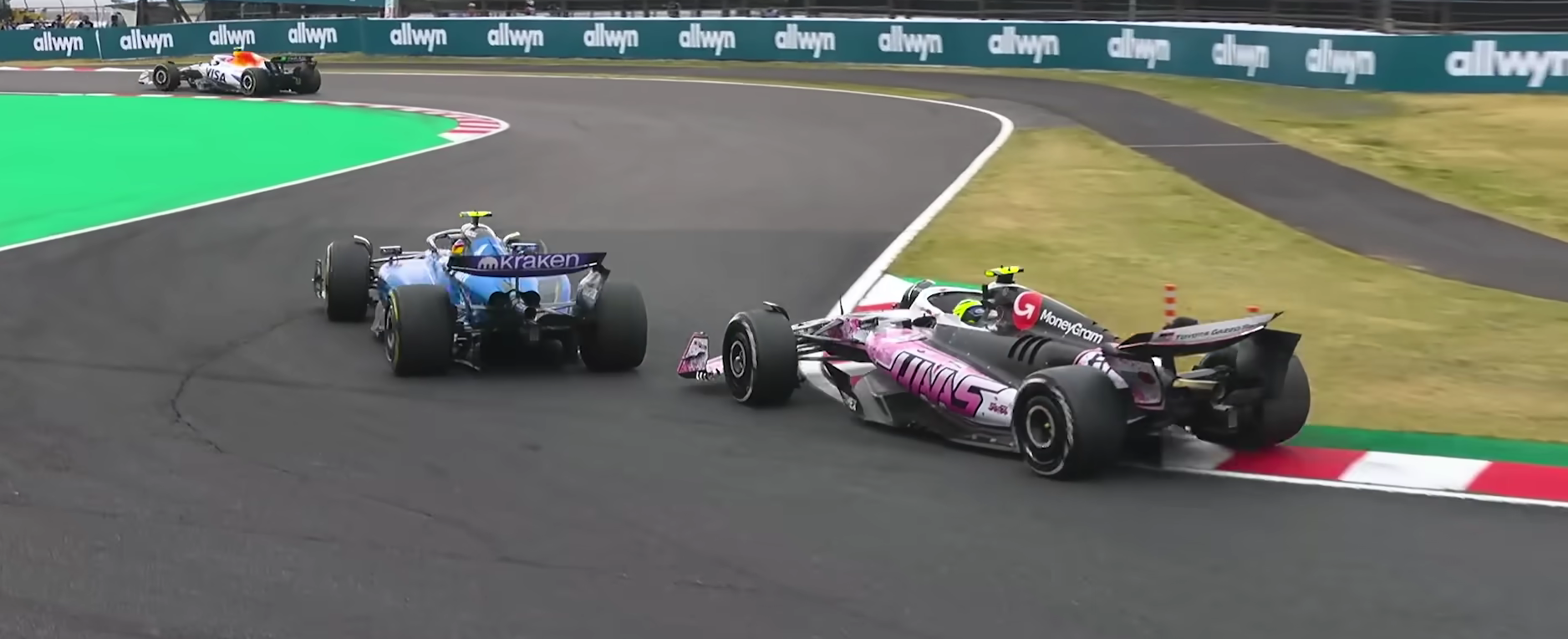
Before Japan, seven Tier B drivers were still on track to rise by $0.6M, even with a negative score. Both Haas and Racing Bulls could also theoretically absorb a double DNF and still gain the maximum $0.6M. That’s the rolling window in its purest form: the previous two races were so strong for these assets that one bad weekend wouldn’t have been enough to stop the rise.
Oliver Bearman is another strong example. He scored 2.7 and 4.3 PPM in Australia and China, respectively, giving him an average of 3.5 PPM heading into Japan. This meant he would only need to score a minimum of -23 fantasy points (-2.7 PPM) to maintain a “great” weekend performance and secure another $0.6M rise. He ended up scoring -14 fantasy points (-1.6 PPM) and still rose by $0.6M.
That lower score, however, makes his anticipated price change after Miami a little more complicated. Looking at his previous two races, he would need to score 13 points to maintain a “great” rating. This is certainly possible considering his performance so far this year, but not as straightforward as in Japan when he already had two great races under his belt. That’s exactly how the rolling window works in practice: once a huge score drops out or a weaker score enters the sample, the margin for another rise becomes much smaller.
There is also a broader 2026 reason asset pricing has been moving quickly: overtakes are way up. With the new regulations forcing drivers into more managed energy harvesting and deployment, overtakes are up sharply through the first three races. Drivers are averaging three additional fantasy overtake points per race compared with 2025. That matters because extra overtake scoring can help an asset maintain a strong three-race value average even on weekends that are not otherwise spectacular.
F1 Fantasy price tiers: why budget assets move more
Price changes are also shaped by whether an asset is priced above or below $18.5M.
Assets priced above $18.5M move in smaller steps, while assets priced below $18.5M are more volatile and can swing by as much as $0.6M. That makes cheaper assets especially important for budget growth. There is now also a lower floor on how far an asset can fall, which limits the downside once a driver or constructor has dropped to the game’s minimum value. Last year, that value was $4.5M. This year, the minimum has dropped to $3.0M.
In practice, that means the biggest gains in team value usually come from spotting underpriced assets before the market fully catches up. Premium assets still matter for scoring, but budget assets are often where your cost cap is really won or lost.
How to use the 3-race rolling window in transfer decisions
The best way to use this mechanic is to stop thinking only about the last race.
Instead, look at three things: how the asset performed for value over the last two races, whether the upcoming circuit suits them, and whether they are in the more volatile under-$18.5M tier. That is the logic behind why pre-weekend price targeting works.
If two drivers look similar for points, the better pick is often the one trending toward a price rise. That gives you a chance to score now while also improving your future transfer flexibility. This is exactly why understanding the rolling window matters more than simply reacting to one strong or weak weekend.
Why the rolling window helps you build budget faster
This is where long-term F1 Fantasy strategy separates itself from short-term reaction.
Growing your budget is what eventually unlocks stronger lineups later in the season. The rolling window is a huge part of that, because it gives prepared fantasy players a chance to buy assets before the price rise lands.
That’s why the 3-race rolling window matters so much. It’s not just a pricing detail. It’s one of the clearest ways to stay ahead of your rivals before the next race even starts.
FAQ
What is the F1 Fantasy 3-race rolling window?
It’s the pricing system that uses an asset’s average PPM across the last three races to determine whether their value rises or falls.
Why did my driver not rise after a good race?
One strong race is only one-third of the calculation. If the previous two races were weak, the three-race average may still not be high enough to trigger a rise.
Why are cheap drivers more important for budget growth?
Lower-priced assets can move more aggressively, which is why budget drivers and constructors often create the biggest cost-cap swings.
Can you predict F1 Fantasy price changes in advance?
Often, yes. Since two-thirds of the next price move is already determined by the previous two races, fantasy players can often spot likely risers and fallers before the weekend begins.
Are there minimum and maximum values an asset can fall or rise to?
Yes. Assets can drop as low as $3.0M and rise as high as $34.0M.


Leave a Reply