
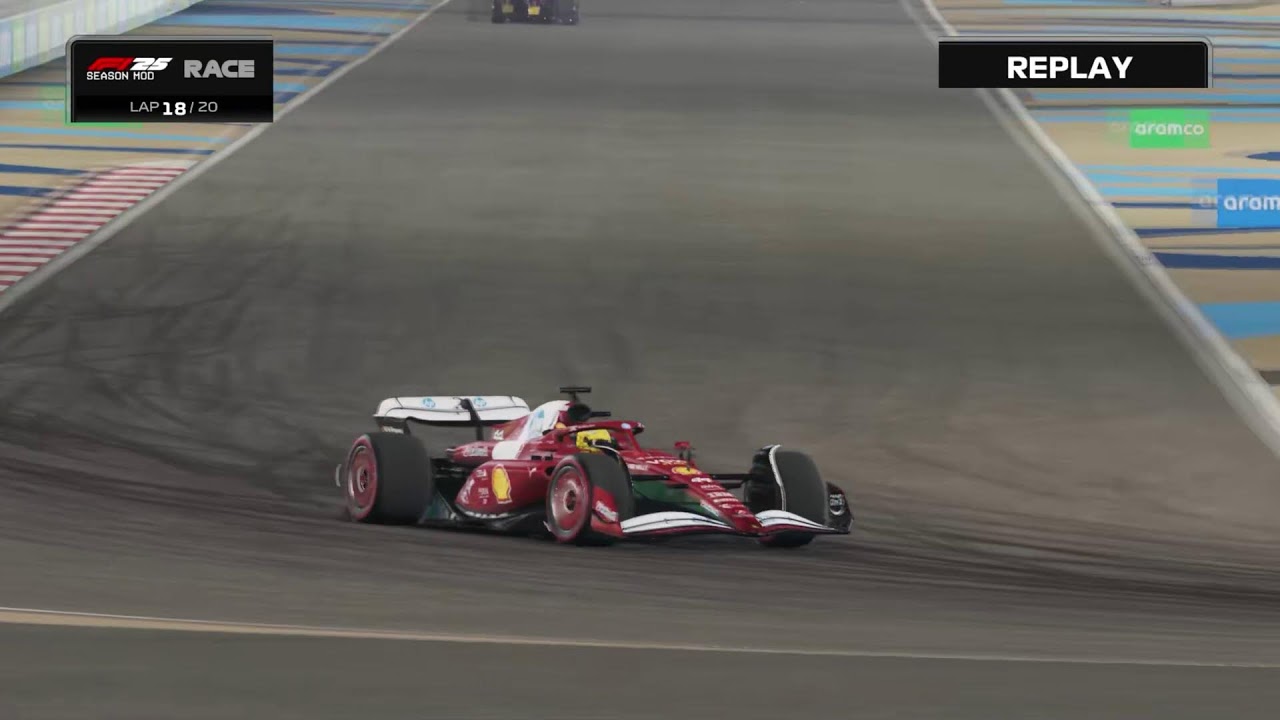
Were it not for the pit lane being closed during a VSC at the Australian Grand Prix last weekend, we could’ve seen two Ferraris on the podium instead of just Charles Leclerc. What it did show was that Ferrari’s SF-26 has the speed and skill to compete for the championship in Formula 1 this season. Ferrari walks into the 2026 Chinese Grand Prix in Shanghai with two advantages nobody else on the grid has. They’ve proven their start speed in Melbourne, and they’re bringing the Macarena wing to the Chinese GP for its first competitive race debut. If there’s one race where both changes will make an impact, it’s Shanghai. Between these and Lewis Hamilton’s historic dominance at Shanghai, here’s why the Chinese GP could be Ferrari’s weekend.
What is Ferrari’s Macarena Wing?
So what exactly is Ferrari’s Macarena wing, and why does it matter at the Chinese GP? When designing the car’s back wing, most teams opted for something similar to how DRS worked. The wing opens up at the back of the car and lies flat, providing less drag and allowing the car to go faster. Ferrari went a different direction, having their entire upper flap rotate upside down to reduce downforce and drag on the car, providing an immense speed advantage.
The way the rear wing normally works is that the upper side is smaller than the lower side, and this creates an air pressure difference, forcing the car downwards. This creates downforce to allow the car to handle corners better, but also slows the car down. By flipping it upside down, it reduces downforce on the straight sections and also reduces drag. In its inverted position, the wing minimizes drag far more aggressively than any conventional flap-open system, and briefly generates a small amount of rear lift that stalls the diffuser, compounding the drag reduction further. This video shows the way it works:
The disadvantages to this system are that the component is heavy, and needs to turn to open and then turn back again to close before hitting the corner. However, because it has to flip right around, it hits fully vertical in the spin, allowing the car to harvest even more energy down the straights.
While Ferrari opted for a more standard setup for Albert Park last weekend, three of these components have reportedly been shipped to Shanghai. This is a game-changer for the China Grand Prix this weekend.
Why the Chinese GP Is the Perfect Stage for Ferrari’s Macarena Wing
The Shanghai International Circuit has a unique design. Not only are there four designated straight-line zones, but the track also has the longest straight section, located between turns 13 and 14. This 1.2km zone is a prime opportunity for Ferrari. Because the Macarena Wing reduces drag so substantially, it also reduces the amount of power the drivers need to deploy down the straights. This means that the Ferrari drivers can enter the hairpin turn at corner 14 at a higher speed, not needing to lift and coast as aggressively to regain battery power.
The circuit at Albert Park did not have as many straight sections, nor one as long as Shanghai. It wasn’t as rewarding to deploy this change last weekend, but Shanghai presents the perfect opportunity.
For Ferrari, the challenge will be getting the drivers used to it on the track. Shanghai is a Sprint Weekend, meaning the team only has one opportunity to test out this setup- during FP1. This is a real risk, as once this is over, parc ferme is in place, meaning the teams can’t change their car setups. If FP1 goes well at Shanghai, this could be a major difference-maker for Ferrari, but if not, they may have to go with the same setup as Australia and put this new wing design in storage for the time being.
Ferrari’s Start Advantage at the 2026 Chinese Grand Prix
The second major advantage that Ferrari has going into the Shanghai Grand Prix is their notable start advantage. Melbourne proved the advantage that Ferrari has off the start, with Leclerc pulling from fourth to first after the first turn and Hamilton jumping up to third in the second lap. The two gained positions from qualifying, but ended third and fourth, respectively.
This wasn’t a fluke. Ferrari’s engine is designed to be the fastest once the lights go out. The engine has a smaller turbo, which doesn’t provide as much sustained power over the race, but it gets going faster off a standstill. This is especially advantageous coming off the starting line, as they are able to get that jolt of extra energy right from the beginning of the race, allowing them to overtake more easily.
Ferrari’s shorter first gear ratio explained
On top of that, Ferrari also has a shorter first gear ratio. In simple terms, that means that the car hits a higher RPM in the first gear, producing more exhaust gas flow, which keeps the turbo spooled before the MGU-K can kick in. Because of the removal of the MGU-H this season, teams needed to find a way to kick in the turbo off the starting line. This solution that Ferrari employs helps them get real speed from a stationary position and gives them a major advantage.
Numerous drivers complained about the starting procedure at Albert Park, with the formation lap causing major drains to the battery as the race began. Charles Leclerc noted that he started with a “very, very low” battery, but also said he had “the least issues” on the grid.
Because of the way the circuit is designed and how many straight sections there are, it doesn’t present as many opportunities to overtake as other races on the grid. Having a strong start heading into turn one matters a lot, and Ferrari has the best setup to start well. With the Sprint this weekend, there is not one but two starts that drivers have to get through.
Ferrari’s start advantage in F1 2026 is both by design and structurally better than anything rivals can quickly replicate.
Lewis Hamilton’s Chinese GP Record: Six Wins and Counting
The technical elements are massive, but equally important; no driver in the field holds a Chinese GP record like Lewis Hamilton’s. The British racer has won at Shanghai a record six times, and is the only driver to win with two different constructors.
The high point of his season last year was winning the Sprint at Shanghai, the only win he had all season. Not only did he win it, but he did it by a seven-second margin. There’s no reason he can’t do it again this year.
For the first time in two years, Hamilton actually seems happy. There’s a smile on his face and excitement in his voice when he speaks. The energy around him already feels better. If he is to take home his eighth WDC, it starts in Shanghai. He enters as the defending Sprint Winner, in a faster car, and with more reasons to attack early. In the sprint, where a starting position and a strong start matter more than strategy, Hamilton has a real advantage in China.
Can Ferrari Actually Win the 2026 Chinese Grand Prix?
Ferrari should be on the podium at the 2026 Chinese Grand Prix, but whether they win depends entirely on sixty minutes of practice. This is a major change from the setup at Albert Park, and the team has one hour to fully train their drivers, gather data on how it works on the circuit, and decide whether to deploy it over the course of the race. That’s not a lot of time to make a decision that could shape the outcome of the weekend.
This Macarena Wing is not a genie in a bottle for Ferrari. Every team had the opportunity to use this system, and only they opted for it. Other teams looked at the system, deeming it either too heavy, too risky, or the upside not high enough to justify.
Mercedes doesn’t have this problem. They can run the same setup they did last weekend and likely earn a similar result. Their setup worked then, and they don’t need to change anything.
Ferrari needs to make a choice, and make one with limited time and information. The upside is immense, with Lewis Hamilton potentially winning his first race of the year. But the downside is just as bad, if not worse. If they go with the setup and it doesn’t work, it’ll be a major talking point for weeks to come.
Ferrari’s Chinese GP Outlook: Two Weapons, One Shot at Mercedes
Ferrari is the team to watch in Shanghai this weekend. If there is a race weekend to watch FP1, it’s this one. If Ferrari deploys the Macarena Wing and it works, they should win the Chinese GP, but if they don’t have the wing in parc ferme and deploy the same setup as Albert Park, they should be in the conversation still.
Even if they don’t deploy the Macarena Wing this weekend, we know it’s in development. With uncertainty about the two Middle East races, the Bahrain Grand Prix and the Saudi Arabia Grand Prix, it gives Ferrari more time to prepare this for deployment. It’s a matter of time before we see it on the grid, and when we do, it should be a game-changer for Ferrari down the straights.


Leave a Reply