

You have $100 million to spend in F1 fantasy, and most drivers waste half of that on expensive drivers who produce little. If you picked Lewis Hamilton at the start of last year, you got decent production, but for what you spent on him, you could have gotten similar results at a quarter of the price point. Here’s the thing people don’t tell you when you start playing F1 Fantasy: the game rewards value over fame. Big names are expensive and often produce results similar to mid-range drivers, which cost substantially less. The metric you need to know on the grid is Points Per Million (PPM). It’s the key to your F1 Fantasy 2026 strategy.
What is Points Per Million in F1 Fantasy?
Points per million divides the total points scored in the previous season by the cost of that driver this year to give you a value of how many points they scored per million dollars spent.
It’s a very simple metric to evaluate a driver’s success against the cost this season. With a hard cap of $100M, you need to optimize your F1 Fantasy strategy to get the most value under the cap. As much fun as it would be to take all of the top drivers, the fun is being able to get real production out of drivers in the midfield.
PPM in action: Looking at the 2025 data against the 2026 costs in F1 Fantasy
Looking at the data, Max Verstappen had 776 F1 Fantasy points last year, and costs $27.7M this season, giving him a PPM of 28.01. That means, he put up 28 points per million dollars. Really good value. Conversely, George Russell had 580 points, but comes in this year at $27.4M. That gives you a PPM of 21.17. For $300k more, you get substantially more value in Verstappen than in Russell. This is just smart F1 fantasy strategy.
In the midfield is where you really start to see the difference. Lance Stroll comes in at $8m this year after putting up a decent 146 points last year. This gives him a PPM of 11.02. For $600k less, Ollie Bearman could be had. He put up 206 points last year, giving him a PPM of a whopping 27.84, second-highest on the entire grid. He was the best value driver last year and is on track to be the best value driver in F1 Fantasy in 2026.
You would have been laughed at last season if you pointed to Esteban Ocon and Ollie Bearman as the best F1 Fantasy Drivers in 2025, but you would have been on to something. They were both outstanding last season, and at the cost, it was an absolute steal. The two outperformed both Ferrari drivers, Kimi Antonelli, and everyone else on the grid at their current prices.
The two value zones and the dead zone in F1 Fantasy in 2026
Looking at the model, there are two zones you want to spend your time reviewing. The first is the top end, the best premium drivers in F1 Fantasy. Only three drivers are worth an honest review in 2026 : Max Verstappen, Lando Norris, and Oscar Piastri. All three are high-priced drivers, costing at least $25M, but all three provide a PPM of over 25. That’s the value you want to see. No other premium driver comes close.
At the bottom end, there is tons of potential in the value drivers in F1 Fantasy. These are the drivers that come in under $8M, but produce at a high level. These are the drivers you want to maximize using PPM.
Then there’s the musy middle. The drivers between Piastri at the top end and Lance Stroll at $8M. This is your drop zone. The drivers you want to avoid most in F1 Fantasy in 2026.
Here is the clearest example of good value versus bad value in 2026 F1 Fantasy. Five drivers produced between 111 and 206 points last season as follows:
| Driver | 2025 F1 Fantasy points | 2026 F1 Fantasy season-opening price (M) | PPM |
|---|---|---|---|
| Isack Hadjar | 111 | $15.1 | 9.85 |
| Carlos Sainz | 130 | $11.8 | 7.35 |
| Lance Stroll | 146 | $8.0 | 11.02 |
| Nico Hulkenberg | 147 | $6.8 | 18.25 |
| Esteban Ocon | 177 | $7.3 | 24.25 |
| Alex Albon | 198 | $11.6 | 17.07 |
| Ollie Bearman | 206 | $7.3M | 27.84 |
The spread between these drivers is insane. You’re paying more than double for Isack Hadjar than Ollie Bearman to get a PPM of about 1/3. You’re paying premium prices to get budget results- it’s not worth it. 30% of F1 Fantasy players have selected Hadjar already this season. Don’t be one of them.
By the same token, Sainz’s production was better than Hadjar’s last season, but at $11.8, you have to ask yourself if you can get better value elsewhere. At $11.8M, getting 7.35 PPM is really not good value in F1 Fantasy this season.
When to override PPM: The 2026 F1 Fantasy Caveat
The clear and obvious argument against PPM is that it takes last year’s point production to try to predict this year’s results. With the number of rule changes, changes to cars, and a whole new team on the grid in Cadillac, a lot is changing in 2026. We do have early data from the Bahrain testing, but at the end of the day, it really could be anyone’s year. Here’s when to override PPM in 2026 F1 Fantasy.
Is the driver in a better car this year?
This especially applies to Isack Hadjar, moving over to the Red Bull. Do you want to pay a premium for Hadjar knowing he’s in the second Red Bull seat because it’s Red Bull? There’s a case for it. However, that seat has claimed many victims, from Yuki Tsunoda to Liam Lawson, to Sergio Perez, and more. Is Hadjar really able to stick it out? And if so, is it worth a $15M gamble?
Haas and Williams both performed better than expected last season. Is this production sustainable in 2026? The F1 Fantasy pricing model seems to think that Williams is a contender, and has priced the two drivers in the $11M range. You need to ask yourself if that valuation makes sense for what you think the point production will be in 2026.
The rookie tax
There were five rookies on the grid last year, Kimi Antonelli, Ollie Bearman, Franco Colapinto, Gabriel Bortoleto, and Isack Hadjar. Two will be on strong teams this year: Hadjar and Antonelli, and both are priced accordingly. Could this year potentially be even better than last? Conversely, is it worth taking a gamble on Bortoleto or Colapinto, banking on their growth in year two in the big league? Colapinto had just 8 F1 Fantasy points last season, while Bortoleto had 53 in the Sauber. Both could take a massive jump up now that they have had a year under their belts. This is a good time to override PPM.
Has the team made significant strides forward (or backwards)
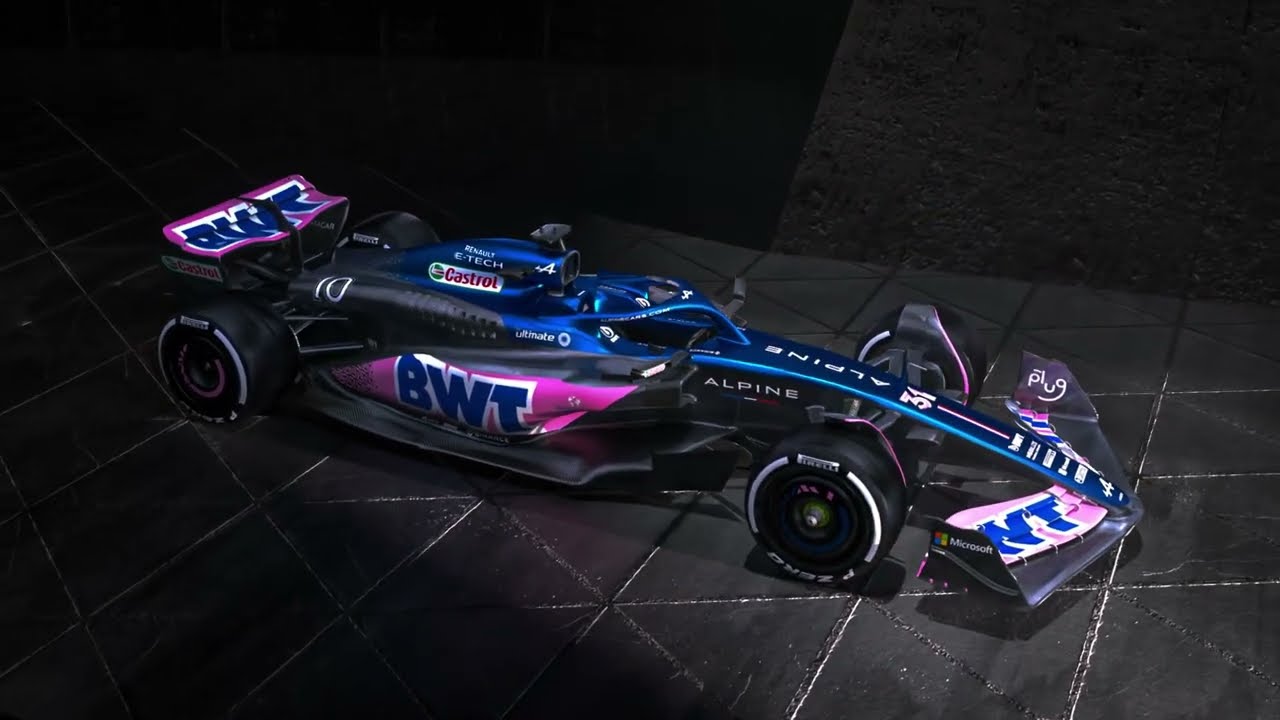
Alpine looked fantastic coming out of Bahrain testing, while Aston Martin has looked especially bad. The PPM model doesn’t account for this at all. If you feel that a car could overperform in 2026, given technical changes, it’s worth overriding the model and taking a chance on that driver or constructor.
Now, it’s worth noting that this will likely be more effective at the bottom end than at the top. Gambling on a top end driver like Lewis Hamilton or Charles Leclerc is both a massive opportunity cost loss, versus a less expensive driver or two, but also you would need to see a huge improvement from either driver, to the tune of 20%. You would also need to see a similar drop-off from the other top drivers to justify that pick today. If you think either is a $28M driver coming in at $22M and change, they would need a huge year and a similar drop-off from other drivers. You’re better off gambling on Ferrari as a Constructor than either driver.
How to use PPM to build your F1 Fantasy team
- Calculate the PPM for each driver on the grid. Use the points produced in 2025 and divide it by the opening price for 2026 to give you a value
- Find the elite driver to anchor your team- this is the driver that you will likely use your 2x bonus on weekly.
- Fill in the rest of your team based on PPM, prioritizing high upside drivers in the $8M range.
- Avoid the middle of the pack unless you have an immense amount of faith in one driver/constructor.
- Keep some reserve. With the changes to the cars this year, the grid order is going to be different at the start. Having a little bit of extra money available will allow you to make tweaks to your lineup.
Use PPM in your F1 Fantasy team selection
PPM is not meant to be predictive, but to give you a really strong starting point when picking your 2026 F1 Fantasy lineup. It’s really easy to calculate and will save you from overpaying for weak results. In a cap-tight game, optimizing your spend is the difference between success and failure. This tool should help you better select your F1 fantasy team before the season starts.

Leave a Reply